










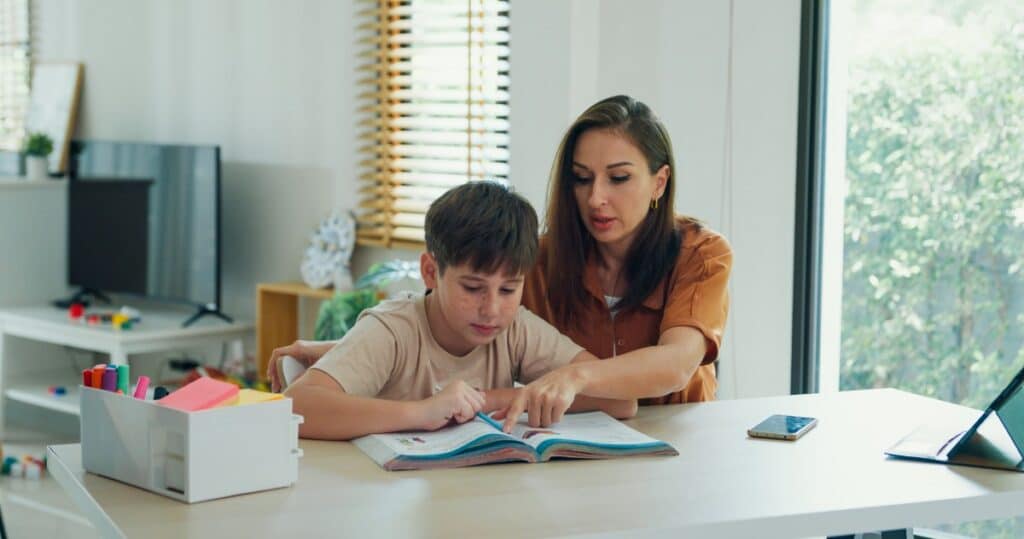
Back-to-school worries are common. Many children feel nervous before a new school year, especially if they are changing teachers, classrooms, schools, routines, or peer groups. A little nervousness before the first day does not automatically mean your child has an anxiety disorder.
But sometimes back-to-school stress becomes more than ordinary jitters. If your child’s worries are intense, persistent, hard to reassure, or interfering with sleep, mood, routines, friendships, or school attendance, anxiety may be playing a larger role.
At Tailwinds Psychology, we often hear from parents who are trying to figure out whether their child is experiencing a normal transition or something more. The difference is not always obvious. Anxiety in children can look like tears, stomachaches, irritability, avoidance, anger, perfectionism, or repeated questions that no answer seems to settle.
The good news is that back-to-school anxiety is treatable. With the right support, children can learn to understand their worries, build coping skills, and return to school with more confidence.
What Is Normal Back-to-School Worry?
Some worry before school starts is expected. Children may wonder:
- Will I like my teacher?
- Will my friends be in my class?
- What if the work is too hard?
- What if I get lost?
- What if I do not know where to sit?
- What if lunch, recess, or the bus feels awkward?
- What if I make a mistake?
These worries are especially common during big transitions, such as starting kindergarten, moving to middle school, beginning high school, changing schools, or returning after a difficult year.
Normal back-to-school worry usually improves as the child becomes familiar with the new routine. A child may need reassurance, practice, sleep support, or a few days to settle in, but they are generally able to attend school, participate, and recover once the year begins.
Anxiety becomes more concerning when the worry does not ease with time or when it begins to control the child’s behavior.
Signs Back-to-School Worries May Be Anxiety
Childhood anxiety can show up in many different ways. Some children can clearly say, “I feel worried.” Others cannot. Instead, their anxiety shows up through behavior, body symptoms, or emotional reactions.
Signs that back-to-school worries may be anxiety include:
- Frequent stomachaches, headaches, nausea, or other physical complaints before school
- Trouble falling asleep or staying asleep
- Repeated reassurance-seeking, such as asking the same question again and again
- Crying, panic, or shutdowns before school
- Refusing to attend school or asking to come home early
- Irritability, anger, or meltdowns when school is discussed
- Avoiding school supplies, schedules, emails, portals, or conversations about school
- Excessive worry about grades, performance, rules, or mistakes
- Fear of being embarrassed, judged, rejected, or separated from a parent
- Difficulty separating at drop-off
- Loss of appetite before school
- Trouble concentrating because of worry
- A major change in mood, behavior, or energy
Anxiety is not always quiet or shy. Some anxious children look oppositional because they argue, refuse, or become angry when asked to do something that scares them. Others look distracted because worry is taking up so much mental space. Some look perfectionistic because they are terrified of getting something wrong.
A helpful parent question is: “Is my child avoiding something because they do not care, or because it feels too hard, uncertain, embarrassing, or scary?”
Why Back-to-School Anxiety Happens
Back-to-school anxiety can have many causes. Some children are temperamentally more cautious or sensitive to uncertainty. Others have had difficult school experiences in the past, such as bullying, academic struggles, social exclusion, conflict with a teacher, panic symptoms, or embarrassment in class.
Anxiety may also increase when a child has other underlying challenges, including:
- ADHD or executive functioning difficulties
- Learning differences
- Autism or social communication differences
- Sensory sensitivities
- Separation anxiety
- Social anxiety
- Perfectionism
- Trauma or stressful life events
- Depression or low self-esteem
- Sleep problems
For example, a child with ADHD may worry because they were frequently corrected last year for forgetting materials or blurting out answers. A child with a learning disability may dread reading aloud or completing timed work. A child with social anxiety may fear lunch, group projects, or recess. A child with sensory sensitivities may feel overwhelmed by crowded hallways, noise, bells, or cafeteria smells.
This is why it is important to understand what is underneath the anxiety. The surface problem may be “school refusal” or “morning meltdowns,” but the reason may involve attention, learning, sensory processing, peer stress, family stress, or emotional regulation.
What Parents Can Do at Home
Parents cannot remove every worry, but they can help children feel more prepared and less alone. The goal is not to convince your child that nothing bad will ever happen. The goal is to help your child learn, “I can handle hard things with support.”
Here are practical ways to help.
Start Talking Before the First Day
Avoiding school talk may reduce anxiety temporarily, but it often makes the first day feel bigger. Begin small conversations before school starts.
Try asking:
- “What are you looking forward to?”
- “What feels uncertain?”
- “What part of the day feels hardest?”
- “What helped you last year?”
- “What do you want your teacher to know about you?”
- “What would make the first morning easier?”
Keep the tone calm and curious. If your child says, “I hate school,” try not to jump immediately into reassurance or correction. Instead, ask what part feels hardest. “School” may mean the bus, math, lunch, handwriting, friendships, transitions, or fear of mistakes.

Create a Predictable Morning Routine
Anxiety often gets worse when mornings feel rushed or chaotic. Children with anxiety and executive functioning challenges may benefit from a simple, visible routine.
A morning routine might include:
- Wake up
- Get dressed
- Eat breakfast
- Brush teeth
- Pack backpack
- Put on shoes
- Use one calm-down strategy
- Leave for school
Keep the routine short and visible. A checklist, whiteboard, or picture schedule can reduce repeated reminders and help the child know what comes next.
Practice the routine before the first day if possible. This is especially helpful for younger children, anxious children, and children who struggle with transitions.
Visit the School or Practice the Route
Uncertainty fuels anxiety. If possible, help your child become familiar with the school environment before the year begins.
Depending on your child’s age and needs, this could include:
- Visiting the school playground
- Walking around the outside of the building
- Attending an open house
- Practicing the bus stop routine
- Driving the drop-off route
- Finding the classroom, locker, bathroom, or cafeteria
- Looking at the school website together
- Reviewing the daily schedule
For some children, even small exposure to the school setting can make the first day feel less unknown. Keep it low-pressure. The goal is familiarity, not perfection.

Help Your Child Name the Worry
Children often feel anxiety in their bodies before they can explain it in words. They may say their stomach hurts, they feel weird, they are tired, or they do not want to go.
You can help by giving language to the experience:
- “It sounds like your worry is showing up.”
- “Your body may be trying to protect you from something that feels hard.”
- “Let’s figure out what the worry is saying.”
- “Is this a small worry, medium worry, or big worry?”
- “What does your worry think might happen?”
Naming the worry helps separate the child from the anxiety. Instead of “I am bad at school,” the child can begin to say, “My worry tells me I will mess up.” That small shift creates room for coping.
Avoid the Reassurance Trap
It is natural to reassure an anxious child. Parents often say, “You’ll be fine,” “There’s nothing to worry about,” or “Your teacher will be nice.” Reassurance can help briefly, but anxious children may return with another question minutes later.
Instead of answering the same worry repeatedly, try helping your child practice coping statements:
- “I can feel nervous and still go.”
- “I do not need to know everything before I start.”
- “If something is hard, I can ask for help.”
- “I have done hard things before.”
- “The first day is for learning the routine.”
You can still be warm and supportive. The difference is that you are helping your child build confidence rather than trying to erase uncertainty.
Do Not Let Avoidance Become the Plan
Avoidance is one of the main ways anxiety grows. When a child avoids school, the bus, the classroom, a difficult subject, or a social situation, they may feel relief in the short term. But over time, the avoided situation can feel even more threatening.
This does not mean forcing a child through panic without support. It means building a plan that helps the child approach the feared situation gradually and safely.
For example:
- A child nervous about the bus might first visit the bus stop, then practice the morning walk, then ride with support.
- A child worried about lunch might plan where to sit and identify one safe person to ask for help.
- A child anxious about schoolwork might meet the teacher early or start with one small academic routine at home.
- A child with separation anxiety might use a brief, predictable goodbye ritual rather than a long negotiation.
When anxiety is significant, gradual exposure with therapist support can be especially helpful.
When Should Parents Seek Professional Help?
It may be time to seek therapy or additional support if anxiety is interfering with your child’s daily life or your family feels stuck.
Consider reaching out if:
- Your child refuses school or frequently asks to stay home
- Morning distress is intense or escalating
- Physical symptoms repeatedly appear before school
- Sleep problems continue for more than a few nights
- Your child avoids peers, activities, or school-related tasks
- Reassurance does not help for long
- Anxiety causes frequent meltdowns or family conflict
- Your child seems depressed, withdrawn, or hopeless
- School concerns have continued across more than one year
- You wonder whether ADHD, autism, or a learning difference may also be involved
Therapy can help children understand anxiety, practice coping skills, build confidence, and reduce avoidance. Parent guidance can help caregivers respond in ways that are supportive without accidentally strengthening anxiety.
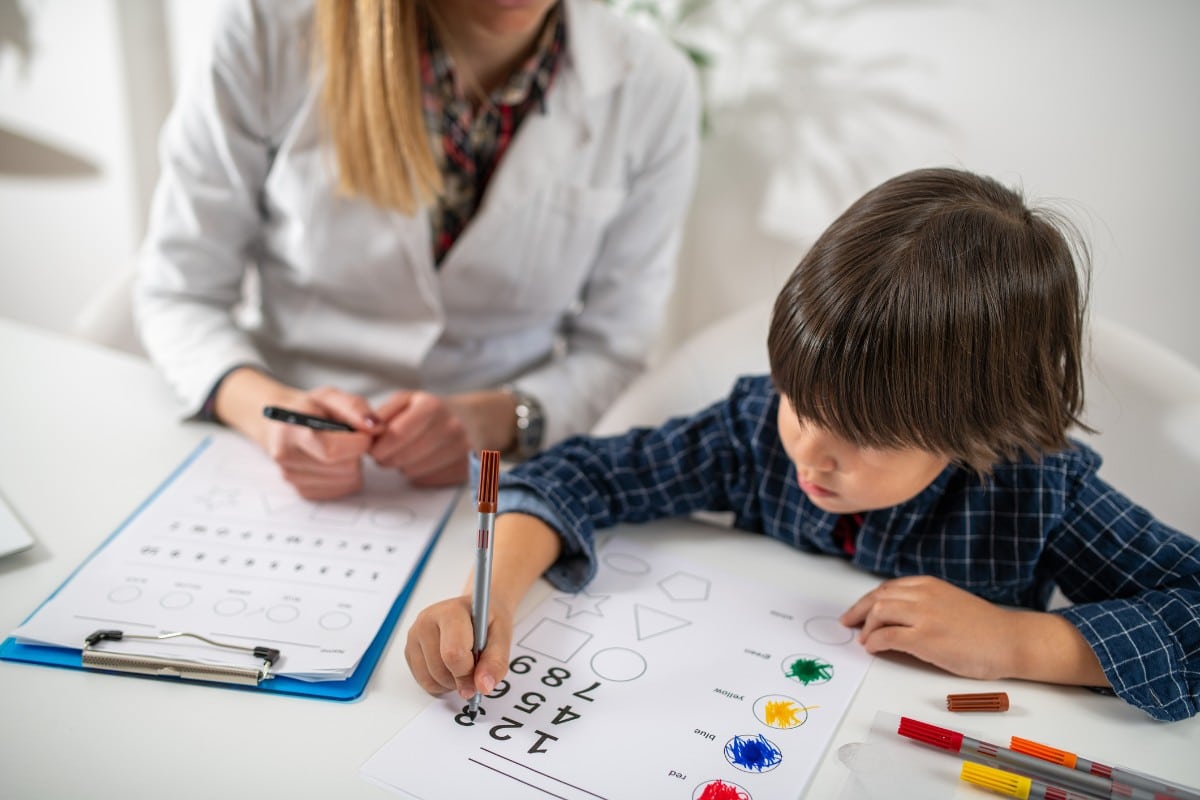
Psychological testing may also be helpful when school anxiety appears connected to attention problems, learning struggles, autism, emotional regulation, or unclear diagnostic questions. If a child is anxious because school has been genuinely hard for reasons no one has identified yet, coping skills alone may not be enough. Understanding the full picture matters.
How Tailwinds Psychology Can Help
At Tailwinds Psychology in Naperville, we support children, teens, adults, and families through therapy, psychological testing, psychiatry, and executive functioning coaching. For back-to-school anxiety, treatment may involve helping your child name worries, practice coping tools, reduce avoidance, and approach school routines with more confidence.
For some families, therapy is the right starting point. For others, psychological testing can clarify whether ADHD, learning differences, autism, or mood concerns are contributing to school stress. Some clients may also benefit from psychiatry when anxiety, mood, sleep, or attention symptoms are more persistent or impairing.
Back-to-school season does not have to become a yearly crisis. If your child’s worries are bigger than ordinary first-day nerves, support can help. With the right plan, your child can begin the school year feeling more prepared, more understood, and less alone.