










Avoidance is one of anxiety’s most powerful tricks. The more we avoid something frightening—flying, driving, heights, public speaking, crowded places, medical procedures—the more our brain learns, “That must be dangerous.” Over time, that fear can grow stronger, even when part of us knows the situation may not actually be unsafe.
Virtual Reality (VR) Therapy, or VRT, helps clients face feared situations in a controlled, supportive, and gradual way. At Tailwinds, we use virtual reality as a tool within therapy as a cutting-edge strategy to make evidence-based anxiety work more accessible, realistic, and manageable.
Most of our therapy services are available through secure video sessions, including:
Individual therapy for adults, teens, and children (depending on age and developmental needs)
Couples counseling and parent consultation
Group therapy
Some components of psychological and neuropsychological assessments (such as intakes, interviews, and feedback sessions)
Note: For younger children or more complex evaluations, we may recommend a hybrid or in-person model to ensure quality of care.
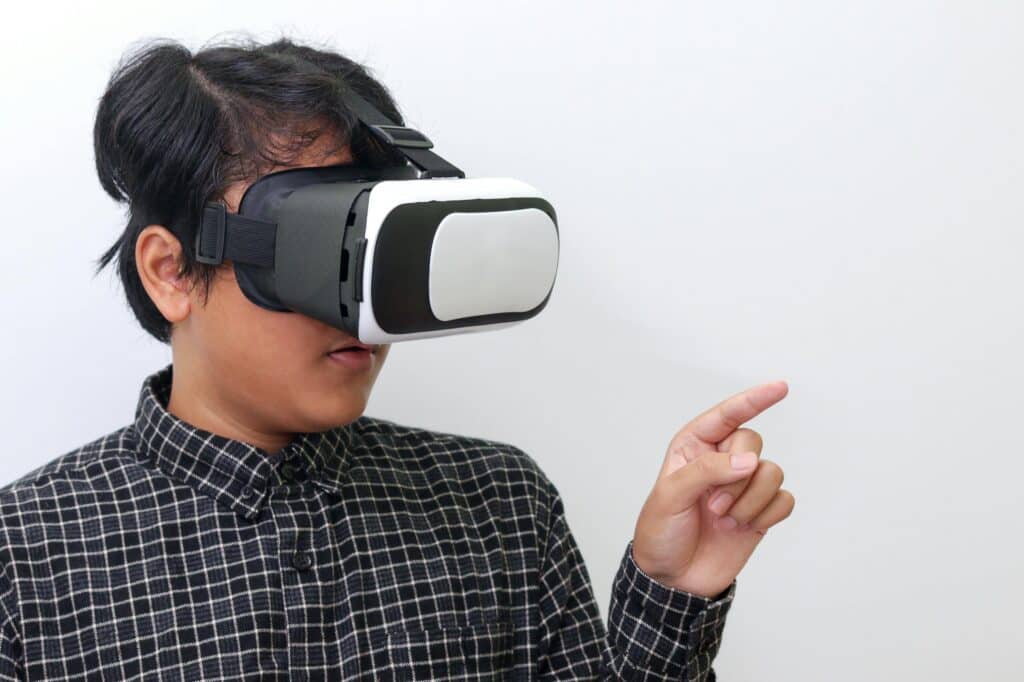

Virtual Reality Therapy uses immersive virtual environments to help clients practice facing situations that trigger fear, panic, avoidance, or distress. Instead of jumping straight into a real-world exposure, clients can begin in a simulated environment while sitting safely in the therapy office.
The goal is not to “force” clients through fear. The goal is to help the brain learn, gradually and repeatedly, that discomfort is tolerable, anxiety can rise and fall, and feared situations do not have to control your life.
Depending on the client’s needs, VR therapy may help with fears related to:
VRT is grounded in the same principles as traditional anxiety and phobia therapy. Your therapist will work with you to understand what you fear, what you avoid, and how anxiety shows up in your body, thoughts, and behavior.
Use our easy scheduling portal to book your first appointment — no phone calls or extensive paperwork required.
In partnership with your therapist, you’ll create a step-by-step plan that starts with manageable situations and gradually builds toward more challenging ones.
Engage your anxieties through virtual experiences while practicing skills such as grounding, breathing, noticing anxious thoughts, and staying present long enough for your nervous system to learn something new.


VRT can also be integrated with other therapy approaches, including Cognitive Behavioral Therapy, Acceptance and Commitment Therapy, mindfulness-based work, and trauma-informed care.


Virtual Reality Therapy at Tailwinds is always guided by a trained clinician. Before using VR, your therapist will talk with you about your goals, symptoms, comfort level, and any factors that may affect whether VR is a good fit.
You will never be thrown into an overwhelming scenario without preparation. The work is structured, collaborative, and designed to help you build confidence over time.
Sessions may include:
Fear shrinks your world. Virtual Reality Therapy helps you expand it again.
Virtual Reality Therapy gives clients a safe, supported way to practice courage before facing difficult situations in real life. With the right guidance, the things that once felt impossible can become manageable—one step, one breath, and one session at a time.