










Hi there, I’m Erica! Thank you for checking out my profile. I’m excited to share more about myself in your search for the right clinician. While I love my job, here’s a little bit about me outside of the office.
These days, I’m likely doing one of three things: trying to hit my reading goal for the year, getting a workout in at the gym, or planning my wedding! Every so often, I come out of retirement from my college golf days and enjoy a day on the course. I also love to travel, and probably have at least one trip booked at all times.
I understand how difficult it can be to make time for all of the things we enjoy and the people we love. I try (and sometimes succeed) in prioritizing the things that truly make me feel the most like myself. For me, this means spending time with my fiancé, my parents, or my closest friends—and if I can arrange for this to happen on a beach, that would be preferred.
If you’re reading this, I’m sure you agree that there just aren’t enough hours in the day, so I sincerely thank you for spending part of yours learning about me. I’m so happy you are here!
PsyD in School Psychology: Indiana State University
…about my favorite Taylor Swift song and album (make sure we have time).
…which book I’m currently reading.
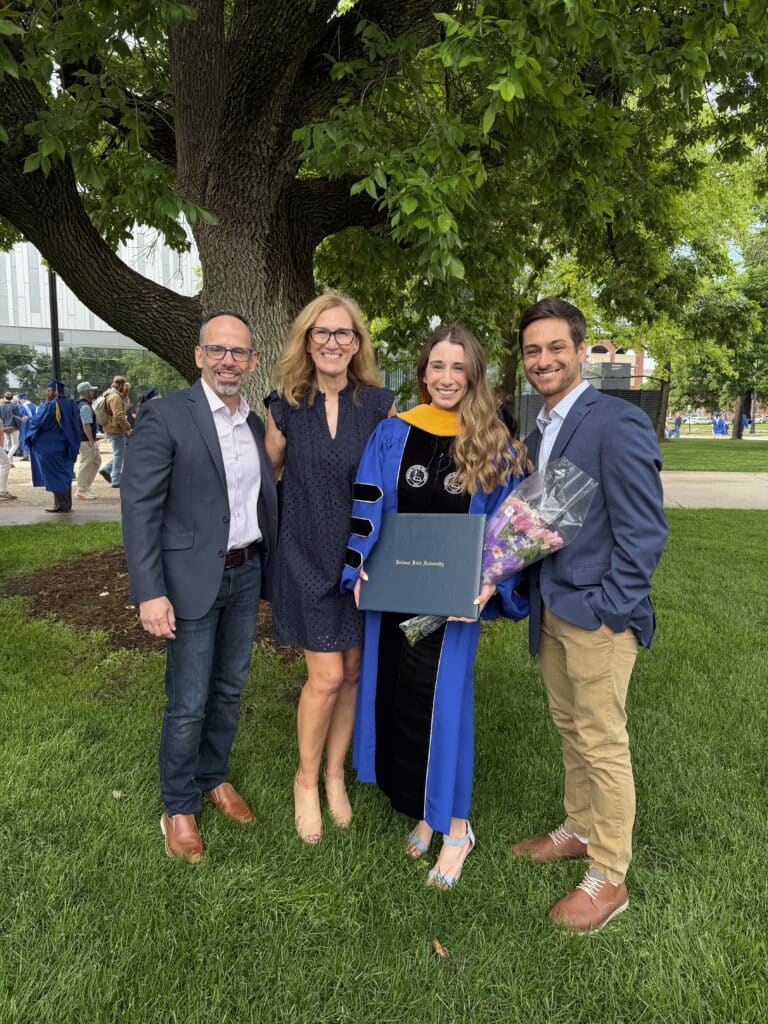
…why I decided to go skydiving in Hawaii to celebrate my college graduation.
…why the best ride in Disney World is objectively Rock ‘n Roller Coaster.

PsyD in School Psychology: Indiana State University
Life can be hard. Like, really hard. My goal as a clinician is simple: to help the people I can, using the skills that I have, right where I am. All that to say, I might not be changing the whole world, but if I can make a little bit of your world easier, then I have done my job.
I don’t believe that you or your child are something to be ‘fixed.’ Rather, my work with clients and families fosters a strengths-based approach to honor the skills you already have and provides you with more tools and clarity to work towards your best self. In my work, I have a come-as-you-are policy; being your authentic self will truly bring you the best results in this process. As a clinician, I value a collaborative relationship (with a hint of humor) to truly make the testing or counseling process feel the most authentic to you.
Testing with me should leave you with clarity. We will start with an intake session so that I can learn more about you or your child. From there, I’ll tailor an assessment battery so that we can get to the root of your questions. Testing sessions are done in person, but we will work collaboratively to schedule these in chunks that are manageable for you or your child. Testing measures look a little different for everyone, but you can expect to complete some game-like activities, answer various questionnaires, and have conversations. Finally, we’ll end with a feedback session, where I’ll review the results, make recommendations, and answer any questions you may have. You can expect to receive the final report within a week or two of our feedback session. If you’re seeking testing for your child, I am happy to collaborate with their teacher or school, as you see fit, to ensure we make appropriate recommendations for your child in all areas of their life.
My favorite compliment is when a client asks me, “So, when are we going to start the testing?” two hours into our testing session!


I know how difficult it can be getting messages from your child’s teacher that they are struggling behaviorally, emotionally, or academically at school. Maybe you get rave reviews from their teachers, only to experience challenges within your own home. As a dually-trained school and postdoctoral clinical psychologist, I have a robust understanding of special education, school supports, and clinical diagnostics, allowing me to help you navigate the process of putting recommendations into action across settings. My goal is to foster growth and well-being in my clients and their families by giving you the tools and supports you need to do the work.
I see clients from 3 years-old throughout the lifespan, though I specialize in working with children, adolescents, and young adults under the age of 25. My most common referral questions include diagnostic clarity for autism spectrum disorder; learning disabilities like dyslexia, dysgraphia, or dyscalculia; executive functioning disorders like ADHD; or mood disorders such as anxiety or depression. In a therapeutic setting, I draw from cognitive behavioral therapy to work with clients in restructuring thought patterns, building life-long self-help skills, and learning how to set goals for oneself. I’ll usually include a game two, so that therapy doesn’t always have to feel like therapy.

Here are answers to questions I hear from clients most often!
Many people consider testing when they’re looking for clearer answers about how they think, learn, or process the world. This might include concerns about attention, memory, learning, or emotional functioning. Psychological testing can provide a more complete understanding of these patterns and help guide next steps.
Psychological and neuropsychological testing can help assess conditions such as ADHD, autism, learning differences, and emotional concerns like anxiety or depression. It can also provide insight into cognitive strengths and challenges, helping you better understand how your brain works.
The psychological testing process typically includes a clinical interview, standardized testing, and questionnaires that assess different areas of functioning. The goal is to create a clear, comprehensive picture of your experiences, followed by a detailed report with practical recommendations.
Social interactions rely on a range of cognitive and emotional processes, including interpreting cues, timing responses, and understanding perspectives. If these feel challenging or effortful, it may reflect differences in how your brain processes social information. Testing can help clarify these patterns and provide insight.
Yes. We provide psychological and neuropsychological testing for individuals in Naperville and throughout the western suburbs of Chicago. Our goal is to make the process clear, supportive, and accessible.
When conducted using evidence-based methods and a comprehensive approach, psychological testing is highly reliable. It looks at multiple aspects of functioning to provide a well-rounded and accurate understanding.
Overthinking can be linked to anxiety, but it can also be related to how your brain processes information and uncertainty. Some individuals naturally analyze more deeply or have difficulty shifting attention. Testing can help determine whether this pattern is part of a broader cognitive or emotional profile.
Many people develop strategies to compensate for underlying challenges, which can make it seem like they’re managing well on the surface. However, this often requires significantly more effort. Testing can help uncover these patterns and provide a clearer understanding of what’s happening beneath the surface.
Our approach emphasizes not just accurate assessment, but also making sure you feel seen, understood, and supported throughout the process. Testing is not just about results—it’s about helping you make sense of your experiences and move forward with confidence
Feeling drained after social situations can happen when those interactions require a high level of effort or conscious processing. For some individuals, especially those who are masking or adapting to fit in, this can be particularly tiring. Understanding these patterns through testing can help explain why this happens.
Many people who seek testing describe a long-standing sense of feeling “different” that’s hard to explain. This can relate to how you think, process information, or experience social situations. Psychological testing can help clarify these differences and provide a more complete understanding of how your mind works.
Difficulty with focus isn’t always about motivation. For some individuals, it’s related to how attention and executive functioning systems operate. This is often seen in ADHD, where focus can be inconsistent rather than absent. Testing can help determine whether attention differences are part of a broader pattern.
Feeling easily overwhelmed can be related to how your brain processes information, sensory input, or emotional experiences. For some, this is connected to anxiety, ADHD, or autism-related traits. Testing can help identify what’s contributing to that sensitivity and how to manage it more effectively.
Many people notice specific areas—like organization, memory, or social interaction—that feel disproportionately difficult. These challenges can reflect underlying cognitive or processing differences rather than a lack of ability. Psychological testing helps clarify these patterns and identify both strengths and areas of difficulty.