










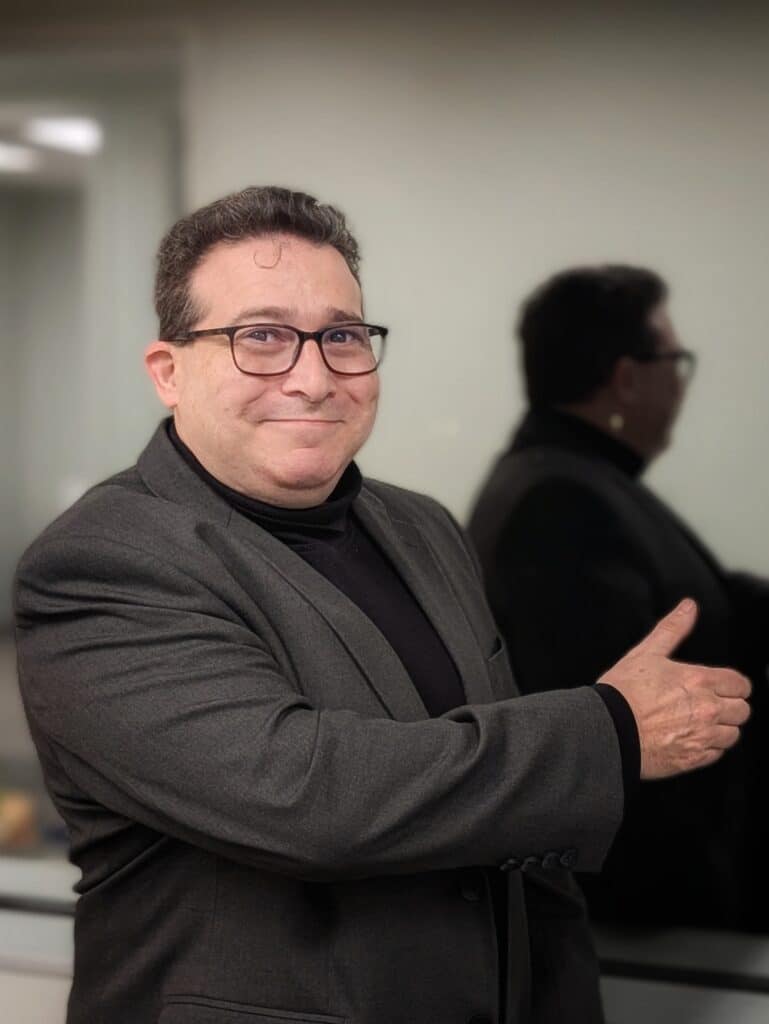
I’ve been married for 23 years to an amazing woman who somehow still chooses to put up with me, and together we have two children who are truly the light of my life. When I’m not at work, you will usually find me spending time with my family—whether that’s sharing a meal together, trying out a new restaurant, watching movies, or just enjoying the everyday moments that make life meaningful. I’m also a big fan of pop culture, so every now and then you might spot me wandering the floor at a Comic-Con or catching the latest movie release. I love telling bad jokes (the worse the joke, the better in my opinion), meeting and learning from new people, and hearing their stories. One of the experiences that has shaped me the most personally is raising a child with autism. That journey has taught me patience, empathy, and the importance of seeing people for who they truly are rather than through labels or assumptions.
“I hope that either all of us or none of us are judged by the actions of our weakest moments, but rather by the strength we show when and if we’re ever given a second chance.”
— Ted Lasso
Master of Social Work: Aurora University
Licensed Clinical Social Worker (IL License #: 149.026540)
…anything pop culture-related.
…the people, famous and not, who I’ve had the pleasure of meeting.
…the lengths to which I will go for tacos and churros from Jack in the Box.
Master of Social Work: Aurora University
Licensed Clinical Social Worker (IL License #: 149.026540)

Every day I have the privilege of meeting people and learning about their lives while helping them work toward healthier relationships and a better sense of themselves. As a counselor, I often meet people during some of the most vulnerable moments of their lives. My goal is to create a space where people feel safe, comfortable, and respected enough to talk openly about what they are going through. I don’t believe therapy is about telling people what they should do. Instead, I see my role as helping guide people as they discover the answers and strengths that already exist within them.
Every morning when I get up, I remind myself of one simple idea: today I make a difference. That mindset is what motivates me in my work. One of the mottos I try to live by—both in counseling and in life—is “Be curious, not judgmental.” When we approach people with curiosity rather than judgment, we open the door to understanding, connection, and growth.
The most important thing I can do when meeting with someone is listen—really listen—without judgment or imposing an agenda, even (and especially) when I assume I know what’s best for a client. I believe in meeting people where they are in life and helping them see that things can get better, even when it doesn’t feel that way in the moment. Counseling is a journey, and I consider it a privilege to walk alongside my clients as they move through challenges, build new perspectives, and work toward the life they want for themselves. My job is to support them, guide them, and help them see that finish line when it might feel far away.


I am a Licensed Clinical Social Worker with over a decade of counseling experience and hold a Master of Social Work (MSW) from Aurora University. Although my primary focus is couples and marriage counseling, I enjoy working with adults across the lifespan—from young adults navigating life transitions to older adults reflecting on relationships and personal growth. Over the years, I have also worked extensively with at-risk populations and with families who have members on the autism spectrum or living with mental health challenges. These experiences have shaped my approach to therapy and deepened my respect for the resilience people show when facing difficult circumstances.
At the core of my work is a simple belief: every person deserves to be treated with dignity, respect, and compassion. Too many people grow up feeling like they don’t belong, like their voice doesn’t matter, or like they aren’t worthy of love and understanding.
I want all clients to hear something very clearly: you belong, you deserve to be loved, you deserve to be treated with dignity and respect, and you matter.

Here are answers to questions I hear from clients most often!
Couples therapy provides a space to slow things down and better understand what’s happening between you and your partner. Many conflicts are driven by patterns that develop over time, often without either person fully realizing it. Therapy helps you both feel heard, improve communication, and begin to work through challenges in a more constructive and connected way.
Not at all. Many couples start therapy before things reach a breaking point. In fact, addressing concerns early—such as communication issues, recurring arguments, or feeling disconnected—can make the process more effective and less stressful. Couples counseling can also be a proactive way to strengthen a relationship.
Repeating arguments is often a sign of deeper patterns in how each person communicates, responds to stress, or interprets the situation. These patterns can become automatic over time, making it feel like nothing changes. Therapy helps identify those cycles and gives you tools to approach those conversations differently.
Rebuilding trust is possible, but it takes time, honesty, and consistent effort from both partners. Therapy can help create a structured and supportive space to work through what happened, process emotions, and begin to rebuild connection in a meaningful way.
Differences in communication styles are extremely common and can easily lead to misunderstandings or frustration. Therapy helps both partners better understand each other’s perspectives and develop ways of communicating that feel clearer and more effective for both people.
It’s a common concern, especially if issues have been present for a long time. While every relationship is different, many couples are able to make meaningful changes even after extended periods of difficulty. The key factors are willingness, openness, and a shared interest in improving the relationship.
This is a difficult and very personal question, and there isn’t a one-size-fits-all answer. Many couples reach this point when patterns feel stuck, communication has broken down, or trust has been impacted. Couples therapy can provide a space to better understand what’s happening in the relationship, clarify what each person wants, and explore whether change is possible. For some, this leads to rebuilding and strengthening the relationship; for others, it brings clarity about next steps. Either way, therapy can help you make a more thoughtful and informed decision.
Therapy sessions are a space to talk openly about what’s going on in your life. Your therapist will listen, ask thoughtful questions, and help you explore patterns, emotions, and experiences in a way that leads to greater understanding and growth. The process is collaborative and tailored to your needs.
Change is absolutely possible. While patterns can feel deeply ingrained, they are not permanent. With the right support, insight, and effort, people can develop new ways of thinking, relating, and responding. Therapy helps create the conditions where that kind of change can happen.
Guilt and regret can be heavy, especially when they feel tied to important parts of your life or relationships. Therapy can help you process these feelings, understand their meaning, and begin to separate who you are from what you’ve been through. Over time, this can lead to greater self-acceptance and the ability to move forward.
Many people develop a strong sense of independence out of necessity or past experiences. While that can be a strength, it can also make it difficult to ask for help or share what you’re going through. Therapy can help you explore where this comes from and build more balance between independence and support.
Opening up can feel difficult, especially if you’ve learned to keep things to yourself or haven’t felt safe doing so in the past. Trust takes time, and therapy moves at your pace. Over time, many people find it becomes easier to talk as they begin to feel more comfortable and understood.